


Dream Raiders 2: Wilds
DreamPlus Games
I went into Dream Raiders 2: Wilds expecting a familiar mobile role-playing adventure, but I came away with a more specific impression: this is best understood as a character-focused fantasy game for players who enjoy building a party, following a colorful adventure, and spending time with a cast that mixes heroic figures with cute creatures. It is not trying to be a quiet, minimalist experience. Its appeal comes from the contrast between a dangerous magical world and a softer visual identity.
That contrast gives the game its personality. The setting feels designed to make the journey approachable even when the story leans toward mature fantasy. I found that combination more interesting than a purely grim presentation, because the adorable creatures give the adventure some warmth instead of making every moment feel heavy. At the same time, the game still carries a Mature 17+ content rating, so I would not treat its friendly character designs as a sign that it is suitable for younger players.
DreamPlus Games develops the game, which is available as a free download with optional purchases ranging from $0.99 to $99.99 per item. That model is important to understand before starting. I could recommend trying it without a financial commitment, but I would also advise deciding in advance how much you are comfortable spending. Free entry is a genuine advantage, while the presence of high-priced purchase options means that long-term enjoyment depends partly on your ability to ignore tempting shortcuts.
How the adventure feels in everyday play
The clearest strength is the way the game presents its world as a journey rather than just a collection of disconnected battles. The premise of heroes, magic, and creatures gives the experience a broad fantasy identity, but the appeal is not only in the setting. I enjoyed the sense that the party itself is the main reason to keep moving forward. The heroes provide the dramatic side of the adventure, while the creatures make the world feel more memorable and less interchangeable.
That makes the game a natural fit for short sessions. I can imagine opening it during a commute, after dinner, or while waiting for an appointment, checking the current objective, making a few party decisions, and then putting it down without needing to treat every session as a major event. It also works for a longer evening when I want to follow the adventure more closely. The important distinction is that this is not a game I would choose for uninterrupted, high-pressure action. Its stronger appeal is the rhythm of progressing, adjusting a team, and seeing what comes next.
Related News






One useful habit is to avoid treating every new character or creature as an automatic upgrade. In a role-playing game built around a broad cast, the most attractive addition is not always the best answer to the problem in front of you. I found it more rewarding to think about how a new member changes the shape of the party. A character that looks less impressive at first may become valuable when paired with a different role, while a powerful-looking addition can be awkward if it does not fit the way I prefer to play.
This is also where the game asks for patience. Players who want immediate clarity may feel that the fantasy presentation is doing more work than the tactical explanation. I recommend taking time to understand what each party member contributes before investing heavily in one direction. That simple pause can prevent the common mobile RPG mistake of spreading resources across too many options and then feeling that progress has become expensive or slow.
The cast is more important than the spectacle
The heroes and creatures are not just decoration. They are the part of the experience that gives the adventure a reason to stand apart from more serious-looking role-playing games. I liked the change of mood created by the creature designs. After a dramatic story beat, a charming companion can make the next stretch feel less exhausting. That balance will not appeal to everyone, but it gives the game a recognizable tone.
Gallery
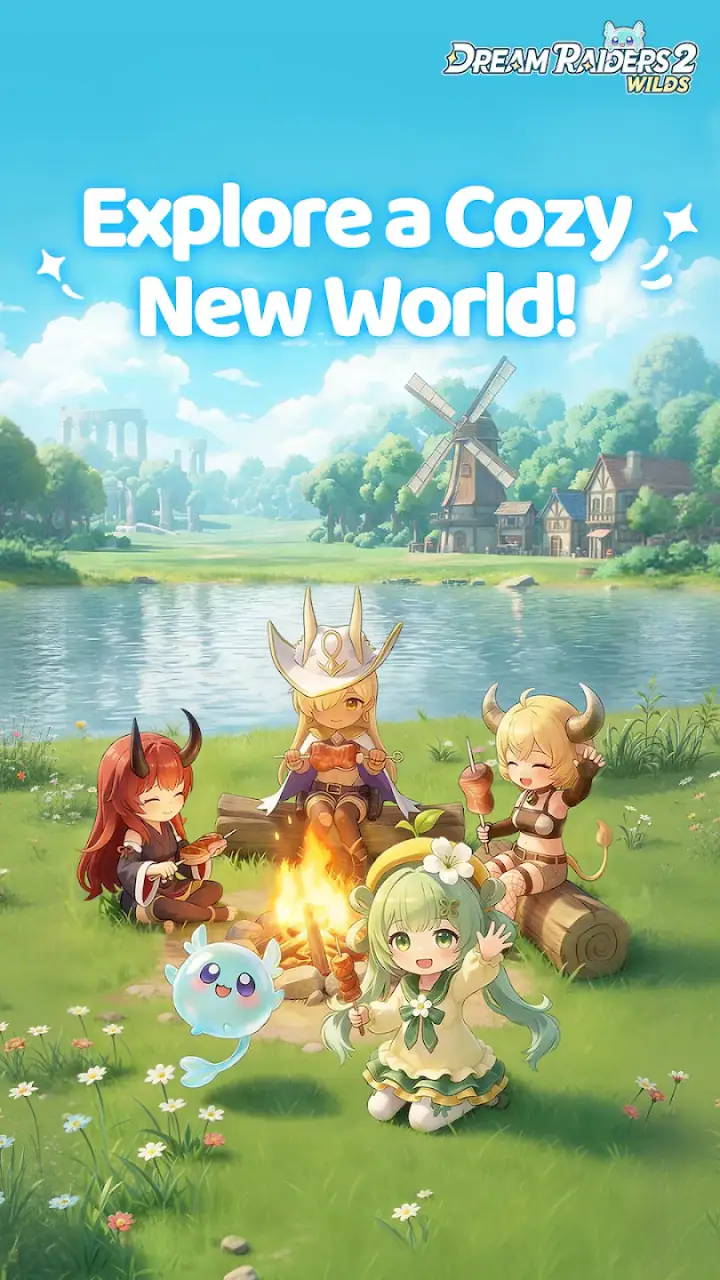
For me, the visual contrast works best when I approach the game as a fantasy journey with personality rather than as a strict competitive challenge. I am more interested in discovering which characters I enjoy using than in chasing a perfect roster. That mindset also makes the free-to-play structure easier to handle, because I can focus on building a team around favorites instead of feeling that I must collect everything immediately.
There is a practical benefit to this approach. If I only have a few minutes, I can choose a small goal: improve one character, review the party, or continue a single piece of the adventure. If I have more time, I can look at the wider roster and consider longer-term combinations. The game therefore has two useful layers: a quick routine for everyday play and a more involved layer for players who enjoy planning.
Where the free-to-play design needs discipline
The free price makes the first step easy, but it does not remove the need for judgment. Optional purchases can be harmless when they remain genuinely optional, yet the range reaching $99.99 per item is a reminder that this is not a game I would recommend playing without boundaries. I would turn off impulsive purchasing where possible, decide whether I am willing to spend anything, and avoid buying simply because a difficult section creates temporary frustration.
My preferred approach is to play long enough to understand the normal pace before spending. That tells me whether I enjoy the core loop or only the excitement of opening something new. It also helps separate a real problem with my party from a moment when the game is encouraging me to pay for convenience. If progress feels satisfying without purchases, the free version may be enough. If the main enjoyment depends on acquiring more and more options, I would reconsider whether the game suits my habits.
This is a meaningful limitation rather than a minor footnote. Players who dislike any form of monetized progression may find the design distracting, even if they like the fantasy world. Someone looking for a complete, premium role-playing game with a fixed price and no purchase decisions will probably be happier elsewhere. A paid adventure can offer a more controlled experience, while a traditional console-style RPG may provide deeper exploration without asking the player to manage a store alongside the story.
What I would do before committing to a long-term team
I would begin by choosing a small group of characters that I actually enjoy using, then observe how they handle different situations before trying to build a large collection. This is more efficient than constantly replacing the party because a new option looks exciting. It also gives the adventure a personal identity: instead of following an imagined “correct” roster, I am shaping a team that matches my own preferences.
I would also keep a simple mental record of what each character is doing well. Is a member helping the party survive, making encounters faster, or adding flexibility? If I cannot answer that, I would delay further investment. This is a particularly useful rule for a free-to-play role-playing game, because it limits wasted resources and reduces the pressure to chase every new possibility.
Another practical tip is to separate story enjoyment from optimization. I do not need to solve every encounter in the most efficient way to appreciate the world and its cast. When I treat every minor setback as proof that my team is wrong, the experience becomes tiring. When I use difficult sections as a reason to review my choices, the same friction becomes part of the role-playing process. The best results come from steady experimentation, not rushed spending.
Who should play it, and who should skip it
I would recommend Dream Raiders 2: Wilds to players who like fantasy role-playing games with a strong cast, magical settings, and a lighter creature-focused visual style. It is especially suitable for someone who wants a game that can fit around a busy day rather than demand a single long sitting. The free download makes it easy to explore that appeal personally, and the game’s character variety gives collectors and team-builders a reason to continue beyond the first session.
It is also a good choice for players who enjoy making gradual progress. If you like comparing party members, trying different combinations, and returning to improve a team, the structure should give you something to think about. I would not approach it expecting every decision to be immediately explained or every new character to be equally useful. The enjoyment comes from learning the roster and deciding what matters to my style.
I would be more cautious with players who want a purely story-driven experience. The fantasy premise may attract you, but a role-playing game with ongoing character development and optional purchases can feel less focused than a one-time narrative adventure. I would also steer away from it if you strongly dislike cute creature designs in serious fantasy settings. That contrast is central to the game’s identity, not a small visual detail that can be ignored.
It is not the right choice for younger children because of the Mature 17+ rating. Parents should pay attention to that rating even if the creature designs appear friendly. Likewise, players who are uncomfortable with purchase options should decide whether the free version feels enjoyable before becoming invested. The game is easier to recommend to someone who can treat purchases as a personal limit rather than as a solution to every obstacle.
Compared with a typical mobile role-playing game, its strongest point is the combination of heroic fantasy and adorable companions. Many games in the category compete through serious worlds, elaborate combat language, or constant collection pressure. This one has a softer identity that may make it more inviting. Its trade-off is that the same presentation may feel less mature in tone than a darker fantasy RPG, while the free-to-play structure can still create the familiar tension between patient progress and paid convenience.
The current version is 1.000.096, and the game supports devices running Android 7.0 or later. That makes checking device compatibility a sensible first step before planning to play regularly. With an average rating of 4.2 from around 41K ratings and over 100K installs, it has attracted a meaningful audience, but those figures should be treated as context rather than a guarantee that its style will suit everyone. Ratings cannot decide whether you enjoy its creature designs, its pacing, or its purchase model.
My verdict after spending time with the wilds
My overall view is positive but measured. Dream Raiders 2: Wilds has a clear identity, and I prefer that to a game that feels like a copy of every other fantasy role-playing release. The mix of heroes, magic, and adorable creatures gives it an approachable surface, while party decisions and gradual development provide enough depth for players who enjoy returning to the same roster and refining it.
The main weakness is not the fantasy concept; it is the need to manage expectations around free-to-play progression. The game is most enjoyable when I decide that I am playing to explore the cast and improve at my own pace. It becomes less appealing when I feel pushed to buy a shortcut or collect every possible option. That distinction makes the game a strong recommendation for patient players and a poor match for anyone seeking a fully premium experience.
I would start with the free version, spend time learning the party, and make no purchase until I knew that the basic adventure was holding my attention. If the combination of colorful companions and team-building clicks with you, there is a good chance the game will become an easy title to revisit during spare moments. If you want a self-contained RPG without monetization decisions, choose a paid alternative instead.
In the end, Dream Raiders 2: Wilds succeeds because it knows what kind of fantasy game it wants to be. It is warm, character-led, and built around the pleasure of assembling a team in a magical world. I recommend it to adults who enjoy mobile role-playing, can set sensible spending limits, and want an adventure with more charm than gloom. I would skip it only if the Mature 17+ rating, the free-to-play purchase model, or the cute-creature aesthetic conflicts with what you want from an RPG.
FAQs for Dream Raiders 2: Wilds
What is Dream Raiders 2: Wilds about?
Dream Raiders 2: Wilds is an adventure-focused mobile game that combines exploration, combat, character progression, and fantastical storytelling. Players travel through dangerous wild regions, face hostile creatures and rival forces, collect useful resources, and improve their heroes over time. Before downloading, keep in mind that the overall experience may include mission-based progression, equipment upgrades, and recurring challenges designed for longer play sessions.
Is Dream Raiders 2: Wilds free to download and play?
The game can generally be downloaded without an upfront purchase, but players should check the store listing for the current pricing and availability in their region. Like many modern mobile games, Dream Raiders 2: Wilds may include optional in-app purchases for resources, cosmetic content, progression assistance, or other bonuses. These purchases are not always required, although they can affect how quickly some upgrades or rewards are obtained.
Can I play Dream Raiders 2: Wilds offline?
Offline availability may be limited, particularly if the game needs an internet connection to verify progress, load events, synchronize an account, or access online features. Some portions of the adventure may work without a connection, but you should not assume that every mode will be available offline. Players with limited mobile data should launch the game on Wi-Fi first and review its connection requirements before traveling.
Does Dream Raiders 2: Wilds support multiplayer or online features?
Dream Raiders 2: Wilds may include online elements such as connected events, rankings, shared challenges, account synchronization, or other features that extend beyond a purely single-player campaign. The exact options can vary by platform, region, and version of the game. If multiplayer interaction is important to you, check the latest store description and in-game menus to confirm whether cooperative or competitive features are currently active.
What devices are recommended for playing Dream Raiders 2: Wilds?
The game should be installed only on a compatible Android or iOS device that meets the operating-system and hardware requirements shown on its official store page. Because adventure games with detailed environments can use considerable storage, memory, battery power, and graphics performance, older phones may experience longer loading times or reduced smoothness. Leave additional free space for updates and use a stable connection during installation.
Pros
- Fast-paced battles are easy to learn but still reward tactical planning.
- Distinct heroes offer useful team combinations and varied combat roles.
- The wild-themed environments give the campaign a lively visual identity.
- Short play sessions make it convenient for mobile gaming.
- Regular rewards help new players build a functional team quickly.
Cons
- Progression can feel slow when upgrading several heroes at once.
- Some encounters depend heavily on having the right team composition.
- The interface may feel crowded on smaller phone screens.
- Late-game content can become repetitive after the initial campaign.
- Performance may vary on older devices during effects-heavy battles.


